
Updated November 2026
If your marketing feels broken, the cause is usually the system underneath it, not the marketing. The five signs: leads come in but don’t close, you get traffic but few leads, every fix is one tactic, sales and marketing blame each other, and nobody can say in one sentence who the buyer is.
Here are the five signs the real problem sits upstream of the tactic you were about to buy, what each one usually means, and what to fix first.
- →Two or more of these signs means another tactic won’t fix it. The system needs a look.
- →Leads that don’t close point to follow-up, not lead generation.
- →Traffic without leads points to a website that never explains why to trust you.
- →Sales blaming marketing points to no shared definition of a good lead.
- →Not knowing your buyer sits upstream of all the others.
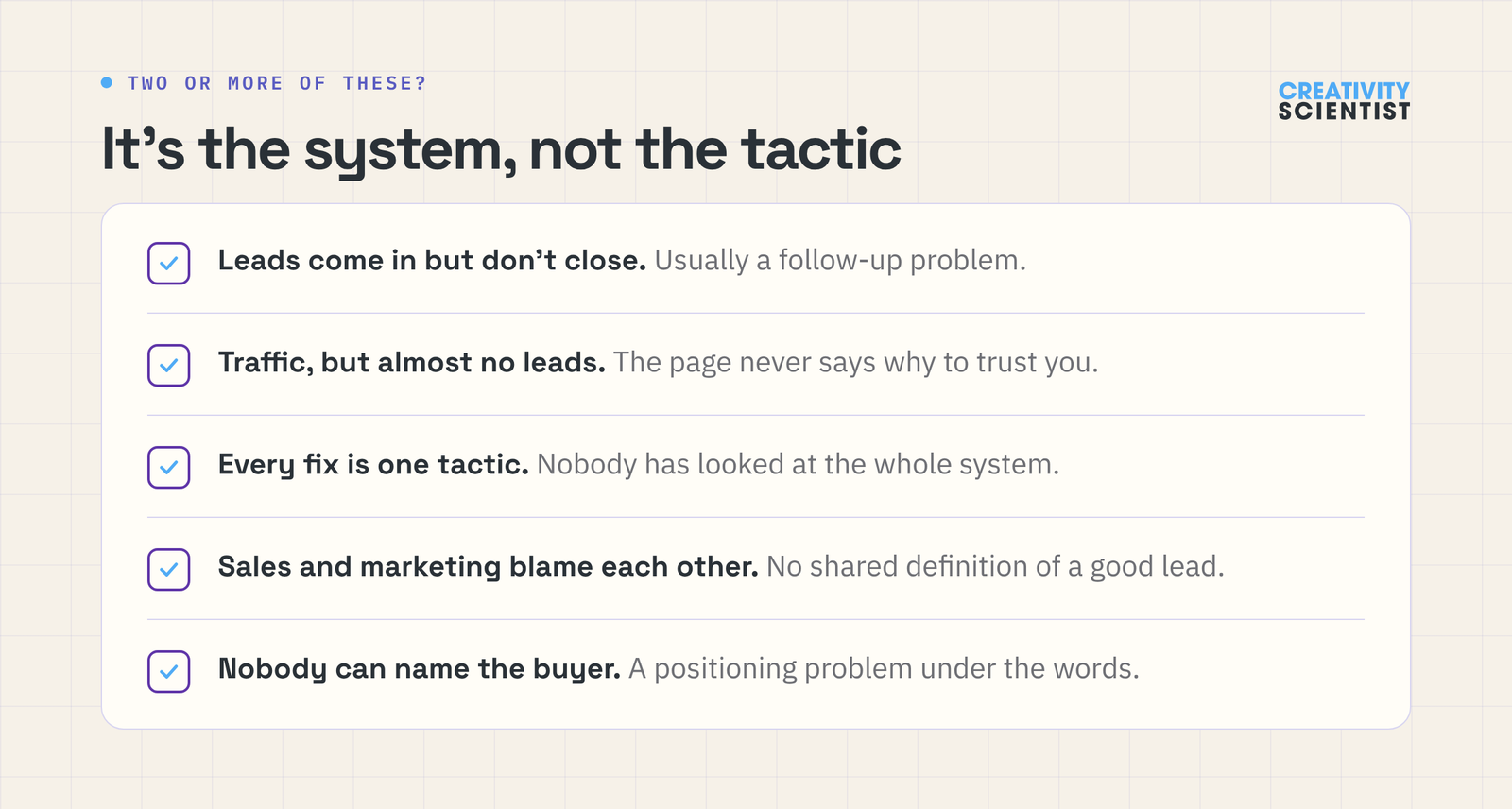
Leads come in but don’t close. Is that a marketing problem?
Usually not. You get inquiries, and they die somewhere between the first touch and the signed deal. Quotes go quiet, follow-up depends on who remembers, and the same lead exists three times in your CRM. Buying more leads pours water into a leaking bucket. The fix is the follow-up system, which is why a connected email and CRM setup usually moves more revenue than another ad campaign. Start with the CRM cleanup guide.
You get traffic but almost no leads. Is the problem traffic?
No. When traffic is healthy and leads aren’t, the website isn’t explaining why to trust you. The message is unclear, the page doesn’t answer the question that brought them, or there is no obvious next step. More traffic makes this worse, not better. You are just showing a confusing page to more people.
Every fix is one tactic, and nothing moves. What does that mean?
New website last year. A round of ads before that. A social push before that. Each one felt like the answer, and revenue didn’t change. That pattern means nobody has looked at the whole system. Bad results are rarely a one-tactic problem, so a one-tactic fix rarely solves them. Find the leak before you build the engine.
Sales and marketing blame each other. Is that a people problem?
It is a handoff problem. Marketing says it is sending leads. Sales says the leads are junk. Both are a little right, and the handoff between them is where deals fall through. When the two sides don’t agree on what a good lead is, no campaign fixes it. Agree on the definition, put it in the CRM, and the blame usually stops. Here is the difference between qualified and unqualified leads.
You can’t say in one sentence who your buyer is. Why does that matter?
Ask five people in the business who the ideal customer is and you get five answers, or a long pause. If nobody can name the buyer, every piece of marketing is aimed at everyone, so it lands on no one. This one is upstream of all the others. Positioning is the foundation the tactics sit on. Get it wrong and even good execution markets to the wrong person.
What does the pattern across all five signs tell you?
| What it looks like | What it usually is | |
|---|---|---|
| Leads come in and don’t close | A lead generation problem | A follow-up problem |
| Traffic but almost no leads | Not enough traffic | A page that never explains why to trust you |
| Every fix is one tactic | The last tactic was the wrong one | Nobody has looked at the whole system |
| Sales and marketing blame each other | A people problem | No shared definition of a good lead |
| Nobody can name the buyer | A wording problem | A positioning problem under the words |
The symptom is almost never where the problem lives. That is why buying the obvious fix, more leads, more traffic, a new campaign, so often changes nothing.
How do you find the real problem fastest?
Walk the whole path a customer takes, from the first search to the signed deal, and note every place it stalls. Then fix in this order: who the buyer is, what the website says to them, how leads get captured and followed up, and only then how many people you reach. I wrote more about that order in why your marketing isn’t working.
The bottom line
If you saw your business in two or more of these, the answer isn’t another tactic. It is a look at the whole system to find where it actually leaks. If you want that look, book 15 minutes with me, whether you sell to homeowners or to engineers and OEMs.
Frequently asked questions
1What does “your marketing problem isn’t a marketing problem” mean?
It means the visible symptom, like too few leads or leads that don’t close, is caused by something underneath the marketing: weak follow-up, a messy CRM, an unclear website or no agreed definition of the buyer. Fixing the tactic doesn’t fix the cause.
2How do I know if I have a systems problem or a marketing problem?
If leads come in but don’t close, traffic arrives but doesn’t convert, or several single-channel fixes changed nothing, it is almost always a systems problem. A true marketing problem looks like too few of the right people knowing you exist.
3If leads come in but don’t close, what should I fix first?
Follow-up. Make sure every lead lands in one place with its source, gets a fast first response and gets followed up automatically. Then check whether sales and marketing agree on what a good lead is.
4What does “positioning is the foundation the tactics sit on” mean?
It means every ad, page and post depends on knowing exactly who you serve and why they should pick you. Without that, even well-run tactics reach the wrong people or say nothing memorable.
5Should I hire a marketing agency or fix the system first?
Fix the system first, or hire someone who will look at it before selling you a channel. An agency that runs one channel well can’t fix leaks in follow-up, the CRM or positioning.